ekottomagazine

NO. 54 - SEPTIEMBRE 2026

Cultural Magazine - Revista Cultural
TABLE OF CONTENTS
Will Ten be Enough for Us?
Luètá Beta
Luètá Beta
Photos and video
For Bubi Speakers
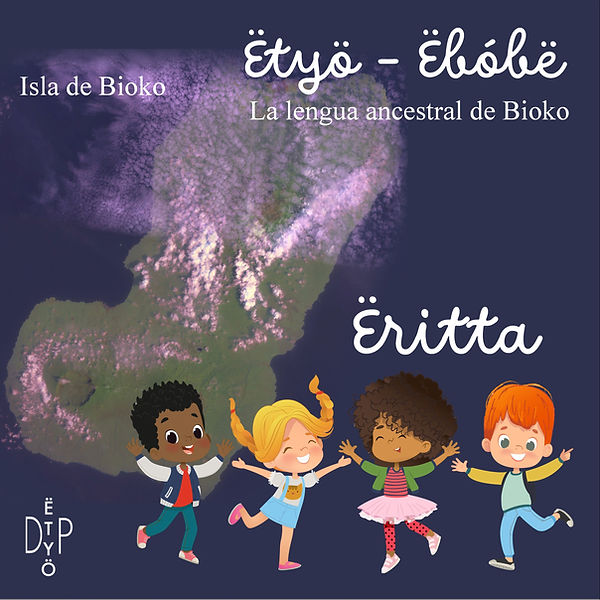
Ëtyö Language Children's Books

Carlos Bolete Lobete
Culture, Society, Plus More


ekottomagazine.com
Ë KOTTÒ, is a magazine of the cultural field in all its disciplines.
We are committed to bringing culture closer to our readers. Our goal is to give visibility to sectors that lack this opportunity of presence in large media platforms.
Our publications will be monthly and will focus on four basic sections and four complementary sections.
EDITORIAL, INFORMATION, INTERVIEWS, ACTIVITIES.
1. EDITORIAL: A general account of a specific topic in each edition.
2. INFORMATION: Its content will be based on learning about our guests' backgrounds, or what could be called their résumés.
3. INTERVIEW. Focused on the professional sphere.
4. ACTIVITY: Focused on our guest's current activities.
OPINION
It is a section for sociocultural opinion articles.
SOKKÒ
It is a section with a variety of socio-cultural news.
POET'S BLOG
A section for poetry and poems.
EMPLUSTV
Ekotto magazine channel on YouTube.
Culture, society, plus more.
THE IMAGE
Interesting. Society and Culture.
With the magazine Ë KOTTÓ, we will bring culture a little closer to our homes.
Editorial
WILL TEN BE ENOUGH FOR US?
Today we kick off the new season by raising a toast to one of the most outstanding young people committed to the arduous task of passing on knowledge about the Bubi language and culture.
Every day, the small but meaningful contributions and encouragement he offers—by passing this knowledge on to children and future generations—are yielding unimaginable results.
This young artist and teacher represents hope for the future. If only we could find about ten young people who are willing and committed! We’d be sure that things would be very different. But

we’re confident that, with his advice and his call to his generation to join this cause—with the goal of preventing the Bubi language and culture from dying out—sooner or later he’ll reach and raise awareness among many who will join the effort to preserve the memory and identity of our history.
Likewise, within these pages, our readers can enjoy a music video featuring a young woman who represents one of the most internationally recognized voices of our society in the world of music.
We know this is back-to-school season, and we don’t want the aspect of our identity to go unnoticed. That’s why, once again, in our pages—within the “Spotlight News” section—we’re including reading materials, educational content, and stories that can help the little ones in our homes gain a deeper understanding of our sense of belonging and identity.
And, to continue building a resource that keeps pace with the times, we’ve added a new section to our table of contents called “THE IMAGE.”
In this section, we’ll publish the occasional image that the magazine’s editorial team selects as most appropriate, provided it aligns with the magazine’s editorial line.
And if any of our readers have an interesting image related to one of the disciplines that align with our sociocultural vision, they can send it to our email address: ekottomagazine@gmail.com.
Story
LUÈTÁ BETA
.jpg)
Name: Luètá Beta Date: July 2005 Place of Birth: Basakato S.F.
I attended preschool at: Abuela Laesa Nitro
I attended first grade at: C.N. Silvestre Sale Bileka and C.N. Enrique Nvo I attended middle school at: INES República Argentina
BÖBÉ
A young cultural promoter, researcher, and teacher of the Bubi mother tongue, committed to the preservation, teaching, documentation, and promotion of the indigenous language and culture of Equatorial Guinea.
Born and raised in a family environment where the Bubi language is deeply valued—65% of conversations within the family take place in Bubi.
Since 2015, I have been actively involved in various initiatives related to the promotion of native languages, including contests, community-based education, media interviews, linguistic documentation projects, the development of cultural materials, and radio programs.
BIUPPÓ
In 2015, I represented the community where I lived (in the Yaundé countryside) at a mother tongue competition in Equatorial Guinea, where I won first place.
In 2020, I taught classes in the village of Baho Basuala for one month (July 2020, Monday through Friday) at the request of the villagers.
In 2022, I taught classes in the village of Basakato S.F. for one month (July 2022, every Monday, Wednesday, and Friday) at the request of ACUJUBA.
On February 16, 2023, I participated in a television interview on Equatorial Guinea’s national TV to discuss the importance of the mother tongue in our society.
In 2023, I taught classes in the village of Basakato S.F. This assignment lasted one month (July 2023, every Monday, Wednesday, and Friday) and was requested by ACUJUBA.
In 2023, I collaborated with VoiceAfrica
In 2024, I began teaching the Bubi mother tongue at the Batoipoko Cultural Center—a role I continue to fulfill to this day—at the request of the Batoipoko Cultural Center and Mr. Bösuböbè
In 2025, the Ëvóvë Ëbóbë sociocultural association selected me to teach classes in the Bubi mother tongue in the village of Baloeri; the classes lasted a month and a half and were held only on Fridays (July and August).
I participated in the creation of the 2026 Bubi names calendar.
On March 15, 2026, I appeared on a program on Equatorial Guinea’s national radio station, *È bilaba biè öbóbe*, where the topic was counting numbers in the Bubi mother tongue.
Translated with DeepL.com (free version)
Interview
LUÈTÁ BETA
1. You began exploring your native language at a very young age. What sparked your interest—even as a child—in learning it, studying it, and sharing it with others?**
From a very young age, I grew up in a family environment where the Bubi language was spoken. A large part of the conversations in my family take place in Bubi, and that sparked a lot of curiosity in me. Over time, I began to wonder about the meaning of the words, the expressions, and the stories behind our language. I then realized that I didn’t just want to learn it for myself, but also to share it with others and help ensure that future generations don’t lose it.
2. Based on your experience as a teacher of the Bubi language, what are the main challenges you face when teaching it to children and young people, and what do you do to spark their interest in learning it? **
One of the main challenges is that many young people do not have the opportunity to use the Bubi language on a daily basis. There is also a lack of materials tailored to teaching the language in a simple and engaging way.
That’s why I try to make the classes hands-on, using conversations, songs, games, examples from everyday life, and expressions they can use with their families. I believe that when a child discovers that they can speak the language and use it in their daily life, they begin to see it in a different light.
3. You’ve gone from participating in activities related to native languages to working as a teacher, researcher, and cultural advocate. How has your relationship with language evolved over the years? **
At first, my relationship with the language was mainly through my family. Later, I became more interested in learning and studying it. In 2015, I had the opportunity to participate in a native language contest, and that was a turning point for me.
Later, I began teaching in different communities and participating in research, documentation, and cultural promotion projects. Today, I see the language not only as something I know, but as a responsibility that I must help pass on.
4. In your work, you have participated in projects involving dictionaries, name calendars, and other cultural materials. What have you discovered during these processes that is difficult to learn solely in a classroom?**
I have discovered that a language holds a great deal of knowledge. When you work on a dictionary or a calendar of names, you are not simply compiling words or names. Behind every word there may be a story, a tradition, a way of understanding nature, or an experience of our ancestors.
I have also learned that there is still a great deal of knowledge that we must gather directly from our elders before it disappears.
5. Based on your experience researching and documenting the Bubi language, what words, expressions, or knowledge do you consider most urgent to record and preserve to prevent them from being lost over the generations? **
I consider it especially important to document traditional expressions, proper names, terms related to nature, agriculture, customs, kinship, ceremonies, and traditional ways of greeting and interacting with others.
It is also important to record the knowledge of older people, because many of them still use words and expressions that younger generations no longer use.
6. A language isn't just a means of communication; it also conveys a way of understanding the world. What values, knowledge, or ways of interpreting life do you think might be lost when a language is no longer passed down from one generation to the next? **
When a language disappears, it is not just a few words that vanish. Stories, values, knowledge, ways of thinking, and unique perspectives on the world can also be lost.
The Bubi language holds an important part of our collective memory. That is why I believe that preserving it also means preserving our identity and our history.
7. You’ve had the opportunity to speak about the importance of native languages on radio and television. What changes when you have to explain to a broad audience why a language deserves to be known, spoken, and preserved?
Speaking on the radio or television involves a different kind of responsibility because you can reach so many people. You’re no longer speaking only to your students or to people who know the language, but also to people who may never have had any exposure to it.
That compels me to explain in simple terms that native languages are valuable and that we shouldn’t be ashamed to use them. On the contrary, we should be proud of them and work to ensure they can coexist with other languages.
8. As a young person involved in cultural promotion, how do you view the role of the younger generations in preserving languages and traditions? Do you think there are new ways to bring culture to young people? **
The younger generations play a crucial role. If young people do not get involved, any preservation efforts may remain only in the books.
That is why I believe we must also make use of new technologies: social media, videos, music, radio programs, apps, and educational content. Culture does not have to remain solely in the past; it can also adapt to new forms of communication.
9. After several years of teaching, conducting research, and participating in cultural projects, what experience has been particularly meaningful to you and has confirmed that the work you do is meaningful?
One of the most meaningful experiences for me has been being able to teach the Bubi language in different communities and seeing how some people begin to take an interest in learning words and expressions they may never have used before.
I also consider it very important to have been able to appear on radio and television to talk about our language. Every time someone tells me that, thanks to a class, a program, or some educational material, they’ve learned something new about Bubi, I feel that the work I do is meaningful.
10. Looking ahead, what would you like to achieve through your work as a teacher, researcher, and cultural advocate, and what legacy would you like to leave for future generations?
I would like to continue my training as a teacher and researcher and participate in projects that will help us better document and teach the Bubi language. I would also like to contribute to the creation of more educational materials, dictionaries, books, and digital resources that can be used by
children and young people.
My greatest hope is that future generations will be able to learn their language, speak it with pride, and understand that preserving it also means preserving a part of our history and our identity.
Activity


OPINION

BÖSUBÓBBÈ MAY MATA
For Bubi speakers
The struggle to preserve our Bubi language continues. We know it’s a difficult task, but not an impossible one. We know that time is running out, that there are fewer and fewer speakers, and that there are people in our community who have no intention of learning Bubi and who aren’t concerned about its disappearance.
That said, it seems we always focus on those who cannot speak the language. But what about those who speak Bubi fluently? Are we giving them the attention they deserve?
In my opinion, the Bubi language is not disappearing simply because many Bubi people cannot speak it. The greatest threat also lies with those Bubi speakers who choose to limit the use of the language to special occasions, certain individuals, or traditional ceremonies.
We see people who are fluent in Bubi using Pidgin or Spanish to speak with other Bubis—people who gather with other Bubis but choose not to speak Bubi. This is one of the greatest threats, because those who have the most power to ensure our language is heard on the street, at the supermarket, at work, at a soccer game, etc., are precisely those who, on many occasions, decide to silence it and reserve it for “special occasions.”
Those who know how to speak the language have a moral obligation to promote it and, above all, to use it. Whether you’re in the neighborhood, in the city, or in the village, sitting with your friends, everyone should be speaking Bubi. Let the friend who doesn’t understand listen; let them listen day after day. Over time, they’ll become one of those who “understand” Bubi, even if they don’t speak it yet.
And then there are the children around us. Children who can get used to hearing those greetings, those short phrases, those words that—when heard clearly and repeated over and over—can stay in a person’s mind for the rest of their life. This is how a language begins to become part of the environment: not only when it’s taught in a classroom, but when it’s heard and used naturally.
Bubi speakers have the power to answer questions about our language, correct the mistakes of those who are learning it, promote its use in different settings, and, above all, demonstrate that speaking Bubi shouldn’t be limited to certain moments or contexts.
Although our language is in a critical situation, Bubi speakers represent a hope for its survival. They can become the future language teachers and instructors—the people capable of passing it on to future generations—if awareness campaigns touch their hearts. They are also the ones who can break down the stereotypes that portray Bubi people as ashamed to speak their own language.
Many might say it’s a matter of shame, inferiority complexes, and so on. But I would say that, in many cases, it’s a combination of apathy and a lack of awareness.
It’s very common to encounter Bubi speakers who respond in Spanish or Pidgin even though you’ve spoken to them in Bubi. This is one of the real problems. Conversations in Bubi don’t flow; they aren’t natural. Sometimes, you start by greeting someone in Bubi, exchange a few phrases, carry on a bit of conversation, and, finally, everything ends up in a language other than Bubi.
In conclusion, the battle to prevent our rich language from disappearing is and will continue to be very difficult. The lack of awareness within our community, coupled with the strong presence of dominant languages such as Spanish, English, and French, makes the future of Bubi increasingly uncertain.
But the survival of a language does not depend solely on how many people are able to speak it. It also depends on how many people are willing to use it, pass it on, and make it part of everyday life. A language that is spoken only at ceremonies, on special occasions, or among certain people runs the risk of gradually becoming a language of memory.
That is why those of us who have the privilege of being able to express ourselves fluently in Bubi also have a responsibility. It’s not enough to know how to speak it—we must actually speak it. We must do so in our homes, in our neighborhoods, in our towns and cities, with our friends, with our children, and with those who are learning it.
Every conversation in Bubi counts. Every greeting, every word, and every phrase we utter helps keep the language alive and demonstrates that it still has a place in our society.
The fight for Bubi’s survival will not be won simply by teaching it to those who do not speak it. It will also be won by convincing those who already speak it that they must not stop doing so.
Because a language does not disappear only when it is no longer learned. It also disappears when those who can still speak it stop using it.
BÖSUBÓBBÈ MAY MATA


Poet's Blog
ËBARI LË ÁTTO*
Na halló ë bisóppí biè ërubba bí pérö booba habba hellá hè *Iobotyobotyo* na ë työkkó ë tyí há séttaèlla.
I búbbú ya ítyí ë bëḿpo biáö, ë itóhi rí a tyátyöri a bańtanta bá batté, ëá ba sèro o hèya.
Ërubba è ëbari ë la béëla i kólla, ë áttë ënné ë työkkó kè ëhuèhuè è billó immá.
Na halló, lèllo, há la hḾmèlla ribötyö rihè, habba hellá ha la ríöbba relá.
Hè habba na ë rihólè ri ókkama a bahuèe.
Hè habba hellá, ë ribolló bötéllo, há la áttëa bihuto, há la akkó bësörí la binëkánëkka, na bi tyáa öppá’a ká bí la huëa.
Ëtyé ë ribötyö rá ömma ri la papèlla'ë, káhò ette ri la sétella há rá bötyö wellá.
Ë ripë’u ri la mpölla rè, i nö’ó lë bisalóle, la la työtyóbia ö tösòpísòpi tö la tyiálla tö ë télle bötèllo.
Ë bëtyíö bí la sáalló billakó,
kóri ötyòma bí tyá síbba télle ná iláppu la wera ë bësekka biá betyö.
Ë bilabba biè úwèró a labbé: a baiè tyía ókkia sibèllö samuáe sí pusálle la bòllá. Ë bétyibi lë birikiriki bi bá úberi ë rihólè rá bòllá bábbò. Ëmmai a baíssö bëllé!
Ë billó bí la úkuba kasökasö.
I nokkò ná yè la lëkèlla ba
a bëtyö la púplla o hutya ö löréi, ë ripé’ám ri ta beí hábba wá’é, tyálla tyóo tótora obbó, Tyá sóttë ë bihóttö bí hétte.
Ë riökkö rí húbièria abëtyö,
ë biátto bí hétyió kua yá bëkotto.
Ë ibarityiö, ë ëhuéhué ë po hétyölla sótte ë biúhá bi lépeya biè i nabba yáó attá.
Ë bësotyi biè itóhi bi la pélla ö tókkó tö booba.
Hè amma bá la rá i hḾmè yá batyílé babbò, hé bellá bá la hútta ë ibekké biábo, bá la mpura ë biéllá biábo, bá háam *bëlokko biè ëkura*.
*(Lösöbbé) Bolete Lobete*
If here the dewdrops water the earth, there is a place where the *desert* and the drought never end.
Dust invades our nostrils; the sun completely dries out the leaves on the trees.
The morning dew heralds the rains; the drought heralds the heat of each day.
If here, today, new life sprouts, elsewhere another fades away.
There is a place where love unites families.
There is another place where hatred breaks the bonds; ropes are braided with vines—those that will soon be untied.
Where one’s life begins, another’s ends.
The sprouting shoot, the banana groves, and the malanga plants absorb the sap they find in their path.
Some work at night because the night never obstructs the way if light illuminates the path of mortals.
Good deeds have turned bad: parents are so agitated they have no time for their children. Hard work and social media have robbed them of their children’s love. Woe to their wives!
The days grow dark quickly.
While their eyes slumber, men learn to rise early in search of bread; though the reward is not enough, the goal is to satisfy their hunger—until the hours pass.
Joy has faded from their faces; the afternoons are draped in mourning.
In the mornings, the heat can strip bare even the bones that rest beneath our skin.
The sun’s rays reach the earth’s core.
Some feed on the sweat of their ancestors; others prop themselves up on their elbows, filling their stomachs—they resemble *slaves to drink.*
*Carlos Bolete Lobete*
*Lösöbé*
EmplusTV
Bësákko Biá Rihólè – Mujer Bubi en Tejido Africano
By Platform Cultura Bubi in partnership with Ekotto Magazine
The Image

TYO’U
Deer
Venado
Ë KOTTÒ
Publisher
Diversity Ëtyö Project
Magazine Director
Barbara May
Editor in Chief
Tomás May Pelico
Designer
Böhulá
Colaboration
Eduardo May Mata
ISSN 2833-4124
© 2026
All rights reserved.
May not be reproduced without the written permission of Ë KOTTÒ.
Contact