ekottomagazine

NO. 55 - OCTUBRE 2026

Cultural Magazine - Revista Cultural
TABLE OF CONTENTS
Our Polyglot
Langston Ralls Seridje Ilarote Masala Morrison
Langston Ralls Seridje Ilarote Masala Morrison
Photos
For Bubi Speakers
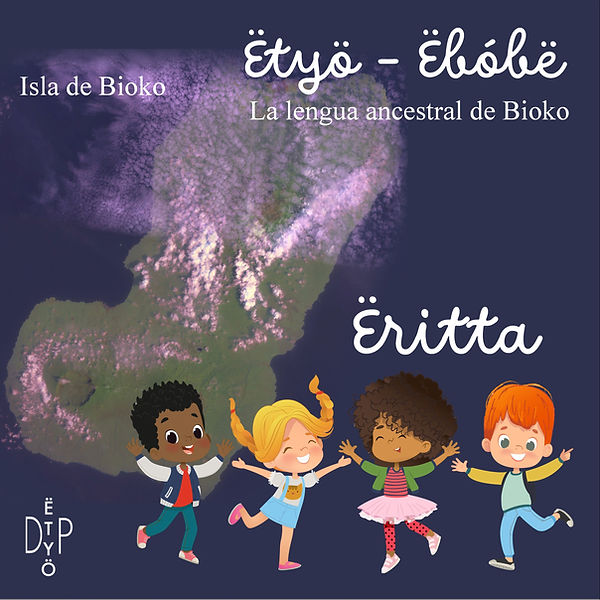
Ëtyö Language Children's Books
Carlos Bolete Lobete
Culture, Society, Plus More


ekottomagazine.com
Ë KOTTÒ, is a magazine of the cultural field in all its disciplines.
We are committed to bringing culture closer to our readers. Our goal is to give visibility to sectors that lack this opportunity of presence in large media platforms.
Our publications will be monthly and will focus on four basic sections and four complementary sections.
EDITORIAL, INFORMATION, INTERVIEWS, ACTIVITIES.
1. EDITORIAL: A general account of a specific topic in each edition.
2. INFORMATION: Its content will be based on learning about our guests' backgrounds, or what could be called their résumés.
3. INTERVIEW. Focused on the professional sphere.
4. ACTIVITY: Focused on our guest's current activities.
OPINION
It is a section for sociocultural opinion articles.
SOKKÒ
It is a section with a variety of socio-cultural news.
POET'S BLOG
A section for poetry and poems.
EMPLUSTV
Ekotto magazine channel on YouTube.
Culture, society, plus more.
THE IMAGE
Interesting. Society and Culture.
With the magazine Ë KOTTÓ, we will bring culture a little closer to our homes.
Editorial
OUR POLYGLOT
This is Seridje Ilarote. We were fortunate enough to welcome him to our newsroom, present his latest literary work, learn about his experiences in the world of poetry, and—surprisingly—discover his ability to speak nearly ten languages, and perhaps even more.
Seridje is a young lawyer, a native of the land of the Eri, now known as the island of Bioko.
Since we embarked on this adventure with the cultural magazine EKOTTO, we had never asked one of our guests so many questions. This time, we did. After learning about his story, we found it very interesting to go beyond the usual number of questions that have always defined our approach.
We sincerely invite our culture-loving readers to take the time to read this new issue of EKOTTO Magazine carefully. We also encourage you to take a look inside its pages and continue enjoying both our previous and new content.
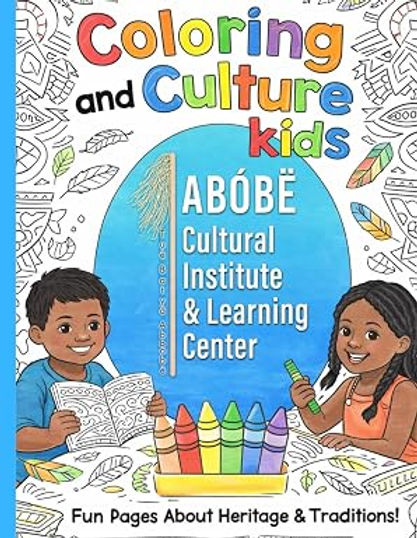
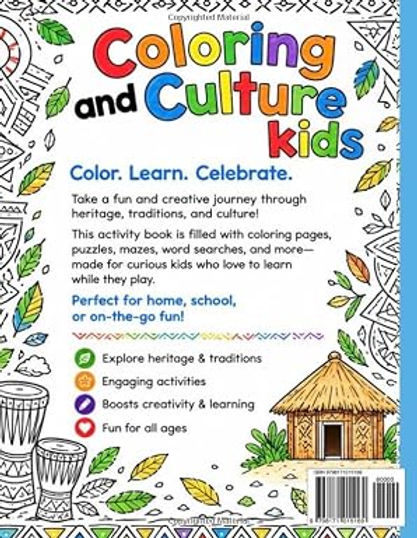
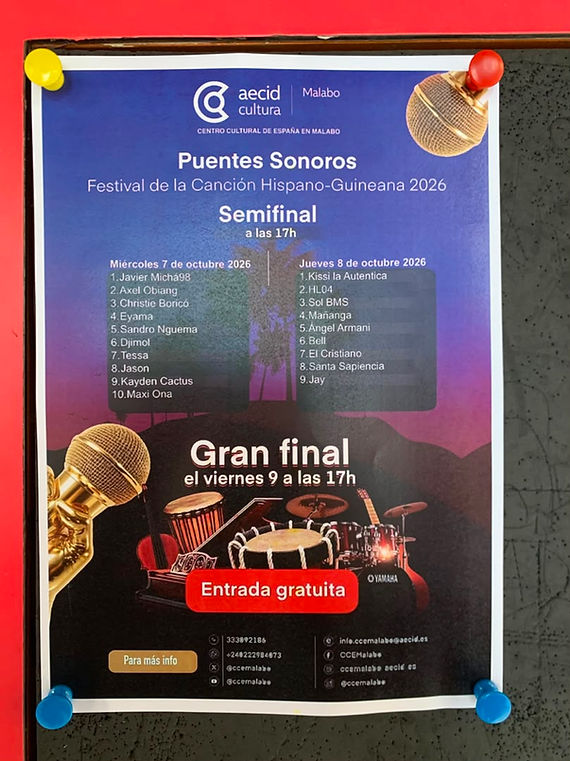
In our news section, you’ll find information about the Abobe Cultural Institute’s new children’s book, as well as details on the music contest to be held at the Spanish Cultural Center in Malabo, where you can enjoy the outstanding voices of promising young artists.
Story
LANGSTON RALLS SERIDJE ILAROTE MASALA MORRISON
My name is Langston Ralls Seridje Ilarote Masala Morrison. I was born on July 23, 1998, in Pennsylvania, in the United States.
Despite having been birthed in the United States, I’ve always thought of myself as a citizen of the world. For some reason, the idea that one’s nationality and where they are born is the main factor in identity formation has always made me feel uncomfortable and uneasy. There’s a sort of inadequacy implicated in that idea because our right to sovereignty and sense of identity cannot and should not be defined by artificial boundaries and borders.
.jpg)
For me, në bötyö, Jamaican, a descendant of artisans and nobles, a poet, a linguist, a law-school graduate, legal scholar, human rights activist, language learner, an English-speaker, Spanish-speaker, Mandarin-speaker, German-speaker, Arabic-speaker, French-speaker, Swahili-speaker, Etyo-speaker, Lingala-speaker, reader and writer of mdw ntr (Egyptian hieroglyphs) and Coptic, an author, a teacher, a language coach, a mentor, a traveler, a writer, a creator, and so much more.
Furthermore, because of my extensive language background, I have been afforded the opportunity to be from and be integrated into multiple linguistic communities. Thus, my identity and where I’m from is not a simple answer for me.
Growing up, I’ve always felt this way, multiple things at once which means operating in and traveling to a variety of different spaces and places.
Many of the places I wanted to travel could only be found in books I read or in my own imagination – they hadn’t yet existed. And, when I would mention to someone that I wanted to travel to a certain place or described the type of place I wanted to go to, people would regard me as too outside the box, different, strange, and more. So, those places just festered in the depths of my imagination for the longest of times, but I would endure and keep dreaming.
When I reached high school, I started reading for pleasure and I was completely and utterly amazed and mesmerized by the places I was seeing in those books. It’s what I had been searching for. But, I wanted more! So, I read voraciously. I read, and read, and read until my eyes bled and could read no more. I was on a mission.
It was around this same time when I invested in my first journal to record my thoughts and leave an inscribed record of my thoughts, plans, actions, and achievements. I was on a mission to leave a legacy, deeply inspired by the work of the ancient kmtyw (“Black People”, erroneously called “Egyptinas”) and the Honorable Marcus Mosiah Garvey, whose magnum opus Message To The People I had been reading at the time. I read his texts and poetry incessantly. This eventually led me to buy more and more journals and fed my thirst for more knowledge.
Then, after graduating from law school and preparing to sit for the bar exam, I started writing poetry to comfort myself while preparing for such a beast of an exam. I wanted to write the types of poems that I wanted to read. Initially, they started out as just that – therapy. But then, one poem turned into about 50 or so, and I thought about the idea of publishing a multilingual poetry collection in three different languages: English, Spanish and Etyo. I wanted something good something novel, something real and true. I wanted to comfort others just as how used my poems to comfort myself. We are all in this together!
So, that’s what I did. And, on February 26, 2025, the day after the second day of the bar exam, I published Maatica: A Multilingual Poetry Collection. The word “Maatica” was taken from two different cultures representing two completely different artistic traditions: (1) the concept of “Maat” from the ancient Kemetic/Egyptian tradition and (2) “poetica”, for poetry.
Maat is a cosmic concept but is often erroneously translated as truth, justice, balance, beauty, reciprocity, harmony, etc. Thus, I named my book Maatica because my poetry is poetry of Maat, the type of poetry where Maat sits at the center of it all. Further, my poems cover a variety of topics and a host of issues from relationships and reading to society’s definitions of success and spirituality.
After publishing Maatica, I didn’t stop there; I wanted to create a community where artists from a variety of different backgrounds can come together and talk about their work, share ideas, talk about their creative processes, etc.
Since then, we have been having more structured prompts to guide our Maatica Poetry Circle discussions, held on Saturdays at 7:00pm ET. It has truly been amazing hearing from our attendees and participants so far. We expect more attendees in the next sessions.
Interview
LANGSTON RALLS SERIDJE ILAROTE MASALA MORRISON
1. You have described your identity as that of a citizen of the world. What does
that idea really mean to you, and how has it evolved over the years?
For me, to be a global citizen simply means my spirit is not connected to one place; it belongs everywhere. Nationality is really a childish concept that is quite limiting, for the worst. I believe I belong in every segment, country, nation, and society, no matter what my passports say. I transcend boundaries because my spirit can be anywhere and everywhere. It is really a concept I have come to adopt a few years ago, emerging out of indigenous societies, that says “the land belongs to no one.” It is more about community and less about individuality, Ubuntu, which now sits at the center of my life and what I would like to be more about.
2. You discovered part of your Bubi heritage in Bioko through DNA testing. How did you react to that result, and what emotions did it stir in you?
I was overwhelmed with joy. Finding out I was Bubi was like remembering who and what I am given the fact that we have been dismembered from our brothers and sisters on the island for centuries. I had finally found one of the missing pieces to my story. But, I did not want to bask in that happiness. I wanted to take that joy and do something with it! So, I started learning our language because, for me, language opens the doors to so many other things.
3. You’ve spoken about the Ëtyö language, also known as Bubi, which is associated with the island of Bioko. What was your first encounter with this language like, and what did discovering it mean to you?
I first discovered that there were language classes being offered while browsing Facebook after looking up “Bubi language.” I immediately signed up with Böhulá’s classes and after our first session, I cried. Then, after graduating from that class and receiving my Bubi name in our naming ceremony, I wept, thinking about the moment, my ancestors from the island, and the fact that they never forgot about us. Learning Ëtyö connected and continues to connect me to my ancestors, our gastronomy, our arts, songs, and so much more. It was just beautiful!
4. What did it mean to you to travel to Bioko for the first time after discovering your Bubi ancestry? Was it easy for you to communicate with everyone because you can speak Spanish and Ëtyö?
Traveling to Bioko for the first time was literally a dream come true. I read a children’s book a few years ago called Africa Dream, and after reading it, I thought “What if we had a Bioko Dream?” Coincidentally, I literally would start dreaming about life in Bioko - the vegetation, the language being spoken all around, the people, the music, the dancing, the fabrics and clothing, the food (I love to eat). So, I was surprised to find out, when I got to Bioko, that literally everything I had dreamt about in my mind and in my dreams was exactly the same when I arrived on the island. Further, it was special for me for a variety of reasons - I had never traveled to Africa before so not only was I going to the continent for the first time, I was going to the land of both my maternal and paternal ancestors, my mother’s people from Bioko and my father’s being from Cameroon (the Bamileke) — my second layover was in Cameroon. So, this was extremely special for me.
Also, yes I can definitely say it was pretty easy for me to communicate with everyone because I can speak Spanish and Ëtyö. However, we went to a variety of different villages in Bioko and they all speak different variants so occasionally I did not understand what they were saying to me in Ëtyö; but nonetheless, everyone was extremely encouraging and supportive of me in continuing my Ëtyö learning journey. It was really a beautiful immersive experience and I cannot wait to go back. That is really family and they really took us in as such everywhere we went.
5. Tell us about your Jamaican roots and how that culture has influenced your life.
Yes, I am also Jamaican. All of my father’s side is Jamaican, and I spent a significant amount of my childhood in Jamaica. I went to primary school and high school in Jamaica before coming back to the United States. Jamaican culture and Bubi culture are actually very similar, and where we are from is even more so - it looks just like Bioko. We are from the countryside in Jamaica in a parish called St. Thomas, on the eastern side of the island. Lush green, country! Very nice. My Jamaican upbringing has taught me a lot about what it means to work, be ambitious, be excellent at and in everything I do, and that I can do anything I want to do in life. There are no limits. In fact, the sky is NOT the limit. It has also taught me what it means to be authentic, bold, and prideful in who I am, and never forget where I came from because people made sacrifices for me to be where I am today. We have a phrase in Jamaica that says “Wi likkle but wi tallawah,” which means we are small but we are mighty. Essentially, Jamaica is a very small island with a population of about 3 million people; yet, we are extremely resilient, mighty, and influential. You will find a Jamaican everywhere who has some influence in every industry and area of society.
6. Your identity brings together different cultural, linguistic, and professional heritages. Which aspects of all these dimensions do you feel are most present in your daily life?
I feel my cultural and linguistic identities have the most influence on what I decide to do and how I prefer to navigate through life. As I mentioned previously, when I learn different languages, I am not just learning words; I am tapping into the larger tapestry of culture which includes worldview. So, in a sense, I have thirteen different worldviews in my head which allows me to consider thirteen different ways of being and learning how to be in this world and move through life whether that is in my profession, in academic, in classroom discussions in school, when engaging with my peers, etc.
7. You speak many languages. How did you learn all those languages and how do you maintain them?
Yes, I speak 11 languages and can read and write two more. I know English, Jamaican Patwa, Spanish, Mandarin, German, Arabic, French, Swahili, Ëtyö, Lingala, Brazilian Portuguese, and I read and write Egyptian hieroglyphs and Coptic.
To be frank, each language has its own unique story and it is quite long. However, long story short, I learned through cultural immersion. I learn how we all learn our native languages - through a lot of listening and speaking. I offer tips and tricks and go into more detail on how I learned different languages on my TikTok @LanguagesWithLangston and in my book The Economics of Language Learning, which is available for purchase on Amazon (unfortunately it’s only available in English at this time).
8. How has speaking and studying so many languages influenced the way you
understand people and the world?
I feel my cultural and linguistic identities have the most influence on what I decide to do and how I prefer to navigate through life. As I mentioned previously, when I learn different languages, I am not just learning words; I am tapping into the larger tapestry of culture which includes worldview. So, in a sense, I have thirteen different worldviews in my head which allows me to consider thirteen different ways of being and learning how to be in this world and move through life whether that is in my profession, in academic, in classroom discussions in school, when engaging with my peers, etc.
9. Do you recall a specific moment from your childhood or adolescence when you began
to feel a special connection to other cultures and places?
I don’t actually recall a specific moment, but my parents like to tell me that it was when I would watch the teletubbies and they would make different sounds and I would laugh as if I understood what they were saying. I don’t know how true that is but it’s definitely something to laugh about.
10. What attracted you to the law profession? What do you hope to accomplish as a lawyer?
Advocacy. I’ve always loved advocacy. Also, my mother is a lawyer and that’s exactly why for the longest time I said I don’t want to be a lawyer. I would see her come home frustrated and sometimes crying and I would think “why would I ever want to get into a profession like that?” But then, as I was pursuing my undergraduate studies at Wesleyan University, I had a lot of professors who would tell me I should consider law school because I make excellent arguments in class discussions and in my papers. I still said no. But they kept pushing me and eventually I considered it more, started watching YouTube videos on the legal profession, law school, and the LSAT, and by my third year of law school (right before the COVID-19 epidemic happened), I purchased my first LSAT test prep book to begin studying.
As a lawyer, I first and foremost want to make a difference in the lives of the communities I care about most. In particular, my passion in international law and human rights, and I hope to one day litigate in that capacity and bring justice to the most vulnerable in our society.
11. You’ve mentioned that many of the places you imagined at first existed only in
books. What role has reading played in shaping your worldview?
Reading is essential. When I dream of going somewhere physically, I decide to actually go there virtually through the experience of others by reading. The practice of reading has also expanded my capacity to see past the periphery and articulate the thoughts, perceptions, and experiences I may not have previously had the language for. It has been critical to my development as a person, a scholar, a dreamer, a traveler, and a writer.
12. During your student years, you began keeping journals to record your
thoughts, plans, and achievements. What have you learned from that habit over time?
Yes! For a long time, the law of attraction and manifestation practices have been used by individuals and communities to create the type of world they see in their mind. This practice has taught me the power of the written word and how it can shape our psyche for the better and for the worse; it helps to remind us where we have been, where we are going, and what we have to do. It is an active participant, I would say, in the creation process.
13. The work of the ancient kmtyw and Marcus Mosiah Garvey has been an important
source of inspiration for you. Which of their ideas continue to guide your work today?
The kmtyw were prolific writers who left inscribed records behind of their achievements for future citizens and members of their society. They left lessons and teachings so others could follow in their footsteps and perhaps achieve greater heights. I have adopted this scholarly practice in writing a lot and on everything as well so as to leave an inscribed record for those who come after me in whatever field I engage in.
As you noted, Marcus Garvey has also served as a source of inspiration for me. He was determined, ambitious, and a visionary when so many people tried to tell him what couldn’t be done and eventually tried to tear him down. I can relate because I’ve also had to deal with a lot of people in my life telling me what is possible and what is not, constantly having to prove myself, all because I have a lot of goals - some of which are extremely high - that they perceive as otherworldly. But, I would encourage everyone to take two things away from this: (1) Whatever can be seen and visualized in the mind first can be created in reality and (2) impossible is an opinion; just because it’s impossible for them does not mean it is impossible for you. You can do anything you set your mind to.
14. You began writing poetry as a way to find solace while preparing for the bar exam. What did you discover about yourself during that creative process?
Writing poetry during the bar exam taught me that I have the capacity to create music and look inside to discover what’s deeper within. It also taught me that I had a lot of stuff that needed a release, a space to get out. I had a lot of information and other stuff in my head and it needed an outlet. Poetry was the first natural outlet that allowed me to express my innermost thoughts. I think it was quite effective because poetry is observational. It expresses some of the deepest emotions of our souls. Poetry is the manifestation of the divine musicality in each and every one of us.
15. Why did you consider it important to publish a collection of poetry in English, Spanish, and Ëtyö, rather than writing it in a single language?
So, Maatica: A Multilingual Poetry Collection is actually a collection of poetry in English, Ëtyö, and Swahili. And there are several reasons for why I wanted to do it: (1) Because I could, (2) to provide more access to our ancestral tongue to the greater Bubi community, and (3) to normalize my capacity to write in more African languages.
I feel like for the longest time I would glorify the use of the written word in other languages (that were not African) because that’s all I could speak at the time, but now since I have the linguistic capacity to do it, why not? I can tap into and glorify the greatness of my own culture while simultaneously respecting the other cultures of the world. That sentiment comes from Ngugi Wa Thiong’o who said “If you know all the languages of the world but don’t know your own, that is enslavement. But, if you know all the languages of the world and your mother tongue, that is empowerment.” So, yes, out of the inspiration of that Kenyan genius, I decided to write more in our African languages.
16. The concept of Maat occupies a central place in your book. How would you explain its meaning to someone encountering your work for the first time?
“Maat” is a complex concept; however, it is an ancient Egyptian concept that is often translated as “truth, justice, balance, harmony, reciprocity.” But, it is a cosmic concept that operates on multiple planes of existence; not just earth. It is central to my book because I put Maat at the center of everything I do, and each poem in Maatica has that concept at the center as well.
17. The poem entitled "7/20” consists of many letters and two words. What is the meaning of that poem?
7/20 is the expression of how I was thinking and feeling on July 20th 2025 studying for the bar exam, stressed out and that all the information was just blending together. However, there is a deeper meaning associated with it. Essentially, the letters and poem generally may be unintelligible to you, but that doesn’t make them untrue and unreal. Broadly speaking, just because you don’t understand something at first glance or from your own perception does not mean it is not intelligible to someone else and that is somehow less true in the cycle of life.
18. The poem entitled “ A Love Letter to Mdw Ntr” is truly that, a love letter. It expresses a feeling of reverence. Please tell us what Mdw Ntr means to you and how it relates to Maat.
Maat is a mdw ntr meaning “truth, justice, balance, harmony, and reciprocity.” Mdw ntr is a language that I fell in love with about six years ago when my teacher Mario Beatty began teaching us the language. What I noticed is that it enhances every other language I speak. Mdw ntr is a very detail-oriented language that requires a lot of focus, attention, and practice. It is extremely beautiful and teaches you about perspective, orientation, drawing, calligraphy, writing, the prolific nature of ancient Egyptians, the complex nature of Egyptian society, and more. I first heard of the language by way of one of the great Théophile Obenga’s YouTube videos where he encouraged every Black person to learn the language. I subsequently decided to carry on their work by eventually studying the language to do a comparative dictionary between a bunch of African languages and to tap into the ancient knowledge that many have lost.
19. The poems in *Maatica* address themes such as relationships, reading, success, and
spirituality. What questions would you like readers to ask themselves after reading them?
I actually don’t want readers to ask themselves any questions. Let the poems speak to you and simply respond. I also do not want to interpret the poems for them. I want to discover what they get out of all of them. I’m fascinated by the diverse voices that exist and seeing what others see that I don’t see.
20. Was there any poem in *Maatica* that proved particularly difficult or meaningful to
write?
“Recompense” and “Carolyn’s Ghost” were the hardest for me to write. “Recompense” was a little difficult because of my personal internal frustrations with people’s disrespect of nature, the world, and community, and what can happen when people don’t feel heard as they try to encourage people to do just that.
“Carolyn’s Ghost” was difficult to write for the simple fact that it alludes to my grandmother who passed away in 2019, and I am still grieving over it. I am still having a very difficult time getting over her passing. We were very close.
21. You published the book right after the second day of the bar exam. How did you handle combining such a demanding academic experience with the launch of your first collection?
I had scheduled the book’s release date a month or so in advance. I wanted to do that because I wouldn’t have to worry about it.
22. After publishing *Maatica*, you decided to create the Maatica Poetry Circle. What personal need or desire led you to build that artistic community?
Yes. After publishing Maatica, I decided to create Maatica Poetry Circle to bring together artists and creatives in different industries to discuss their processes, their work, and brainstorm together on a variety of topics. I just wanted a community of similar situated individuals to think together and just be; I feel like we don’t have as many of these these days. Our sessions are every Saturday at 7:00pm ET on Zoom. For more information, please email langstonmorrison@gmail.com.
23. What would you like the Maatica Poetry Circle and your creative work to offer the
people who participate in them in the coming years?
I want us to eventually have in person sessions where we take Maatica Poetry Circle on the road as not everyone who wants to be part of the community has the kind of technological access that access to the community requires. So, I want to expand access to people who want to be part of the community.
24. What do you hope to accomplish in the near future?
There is so much work being done. I want to do more work in the legal and human rights space. We just published our third book titled Recognizing Linguicide: The Batyö Abóbë, Genocide, and International Law, and we are currently working on our fourth which will be a spiritual text. More projects coming and more languages to be learned. But we are going big because we can, because we are Bubi, and we are great!


OPINION

BÖSUBÓBBÈ MAY MATA
For Bubi Speakers
The struggle to preserve our Bubi language continues. We know it’s a difficult task, but not an impossible one. We know that time is running out, that there are fewer and fewer speakers, and that there are people in our community who have no intention of learning Bubi and who aren’t concerned about its disappearance.
That said, it seems we always focus on those who cannot speak the language. But what about those who speak Bubi fluently? Are we giving them the attention they deserve?
In my opinion, the Bubi language is not disappearing simply because many Bubi people cannot speak it. The greatest threat also lies with those Bubi speakers who choose to limit the use of the language to special occasions, certain individuals, or traditional ceremonies.
We see people who are fluent in Bubi using Pidgin or Spanish to speak with other Bubis—people who gather with other Bubis but choose not to speak Bubi. This is one of the greatest threats, because those who have the most power to ensure our language is heard on the street, at the supermarket, at work, at a soccer game, etc., are precisely those who, on many occasions, decide to silence it and reserve it for “special occasions.”
Those who know how to speak the language have a moral obligation to promote it and, above all, to use it. Whether you’re in the neighborhood, in the city, or in the village, sitting with your friends, everyone should be speaking Bubi. Let the friend who doesn’t understand listen; let them listen day after day. Over time, they’ll become one of those who “understand” Bubi, even if they don’t speak it yet.
And then there are the children around us. Children who can get used to hearing those greetings, those short phrases, those words that—when heard clearly and repeated over and over—can stay in a person’s mind for the rest of their life. This is how a language begins to become part of the environment: not only when it’s taught in a classroom, but when it’s heard and used naturally.
Bubi speakers have the power to answer questions about our language, correct the mistakes of those who are learning it, promote its use in different settings, and, above all, demonstrate that speaking Bubi shouldn’t be limited to certain moments or contexts.
Although our language is in a critical situation, Bubi speakers represent a hope for its survival. They can become the future language teachers and instructors—the people capable of passing it on to future generations—if awareness campaigns touch their hearts. They are also the ones who can break down the stereotypes that portray Bubi people as ashamed to speak their own language.
Many might say it’s a matter of shame, inferiority complexes, and so on. But I would say that, in many cases, it’s a combination of apathy and a lack of awareness.
It’s very common to encounter Bubi speakers who respond in Spanish or Pidgin even though you’ve spoken to them in Bubi. This is one of the real problems. Conversations in Bubi don’t flow; they aren’t natural. Sometimes, you start by greeting someone in Bubi, exchange a few phrases, carry on a bit of conversation, and, finally, everything ends up in a language other than Bubi.
In conclusion, the battle to prevent our rich language from disappearing is and will continue to be very difficult. The lack of awareness within our community, coupled with the strong presence of dominant languages such as Spanish, English, and French, makes the future of Bubi increasingly uncertain.
But the survival of a language does not depend solely on how many people are able to speak it. It also depends on how many people are willing to use it, pass it on, and make it part of everyday life. A language that is spoken only at ceremonies, on special occasions, or among certain people runs the risk of gradually becoming a language of memory.
That is why those of us who have the privilege of being able to express ourselves fluently in Bubi also have a responsibility. It’s not enough to know how to speak it—we must actually speak it. We must do so in our homes, in our neighborhoods, in our towns and cities, with our friends, with our children, and with those who are learning it.
Every conversation in Bubi counts. Every greeting, every word, and every phrase we utter helps keep the language alive and demonstrates that it still has a place in our society.
The fight for Bubi’s survival will not be won simply by teaching it to those who do not speak it. It will also be won by convincing those who already speak it that they must not stop doing so.
Because a language does not disappear only when it is no longer learned. It also disappears when those who can still speak it stop using it.
BÖSUBÓBBÈ MAY MATA


Poet's Blog
ËBARI LË ÁTTO*
Na halló ë bisóppí biè ërubba bí pérö booba habba hellá hè *Iobotyobotyo* na ë työkkó ë tyí há séttaèlla.
I búbbú ya ítyí ë bëḿpo biáö, ë itóhi rí a tyátyöri a bańtanta bá batté, ëá ba sèro o hèya.
Ërubba è ëbari ë la béëla i kólla, ë áttë ënné ë työkkó kè ëhuèhuè è billó immá.
Na halló, lèllo, há la hḾmèlla ribötyö rihè, habba hellá ha la ríöbba relá.
Hè habba na ë rihólè ri ókkama a bahuèe.
Hè habba hellá, ë ribolló bötéllo, há la áttëa bihuto, há la akkó bësörí la binëkánëkka, na bi tyáa öppá’a ká bí la huëa.
Ëtyé ë ribötyö rá ömma ri la papèlla'ë, káhò ette ri la sétella há rá bötyö wellá.
Ë ripë’u ri la mpölla rè, i nö’ó lë bisalóle, la la työtyóbia ö tösòpísòpi tö la tyiálla tö ë télle bötèllo.
Ë bëtyíö bí la sáalló billakó,
kóri ötyòma bí tyá síbba télle ná iláppu la wera ë bësekka biá betyö.
Ë bilabba biè úwèró a labbé: a baiè tyía ókkia sibèllö samuáe sí pusálle la bòllá. Ë bétyibi lë birikiriki bi bá úberi ë rihólè rá bòllá bábbò. Ëmmai a baíssö bëllé!
Ë billó bí la úkuba kasökasö.
I nokkò ná yè la lëkèlla ba
a bëtyö la púplla o hutya ö löréi, ë ripé’ám ri ta beí hábba wá’é, tyálla tyóo tótora obbó, Tyá sóttë ë bihóttö bí hétte.
Ë riökkö rí húbièria abëtyö,
ë biátto bí hétyió kua yá bëkotto.
Ë ibarityiö, ë ëhuéhué ë po hétyölla sótte ë biúhá bi lépeya biè i nabba yáó attá.
Ë bësotyi biè itóhi bi la pélla ö tókkó tö booba.
Hè amma bá la rá i hḾmè yá batyílé babbò, hé bellá bá la hútta ë ibekké biábo, bá la mpura ë biéllá biábo, bá háam *bëlokko biè ëkura*.
*(Lösöbbé) Bolete Lobete*
If here the dewdrops water the earth, there is a place where the *desert* and the drought never end.
Dust invades our nostrils; the sun completely dries out the leaves on the trees.
The morning dew heralds the rains; the drought heralds the heat of each day.
If here, today, new life sprouts, elsewhere another fades away.
There is a place where love unites families.
There is another place where hatred breaks the bonds; ropes are braided with vines—those that will soon be untied.
Where one’s life begins, another’s ends.
The sprouting shoot, the banana groves, and the malanga plants absorb the sap they find in their path.
Some work at night because the night never obstructs the way if light illuminates the path of mortals.
Good deeds have turned bad: parents are so agitated they have no time for their children. Hard work and social media have robbed them of their children’s love. Woe to their wives!
The days grow dark quickly.
While their eyes slumber, men learn to rise early in search of bread; though the reward is not enough, the goal is to satisfy their hunger—until the hours pass.
Joy has faded from their faces; the afternoons are draped in mourning.
In the mornings, the heat can strip bare even the bones that rest beneath our skin.
The sun’s rays reach the earth’s core.
Some feed on the sweat of their ancestors; others prop themselves up on their elbows, filling their stomachs—they resemble *slaves to drink.*
*Carlos Bolete Lobete*
*Lösöbé*
EmplusTV
Bësákko Biá Rihólè – Mujer Bubi en Tejido Africano
By Platform Cultura Bubi in partnership with Ekotto Magazine
The Image

BÖSÖPÉ
Squirrel
Ardilla
Ë KOTTÒ
Publisher
Diversity Ëtyö Project
Magazine Director
Barbara May
Editor in Chief
Tomás May Pelico
Designer
Böhulá
Colaboration
Eduardo May Mata
ISSN 2833-4124
© 2026
All rights reserved.
May not be reproduced without the written permission of Ë KOTTÒ.
Contact