ekottomagazine

NO. 50 - MAYO 2026

Cultural Magazine - Revista Cultural
TABLE OF CONTENTS
Generational Transition
Thiago Bernabe Sorizo Vargas
Thiago Bernabe Sorizo Vargas
Fotos and videos
Bioko: Between the Natural and the Harmful
"Count in Ëtyö" by Biëtáa Niima Jen Tyes

Waíssö, Rihóllè Rillé
Culture, Society, Plus More


ekottomagazine.com
Ë KOTTÒ, is a magazine of the cultural field in all its disciplines.
We are committed to bringing culture closer to our readers. Our goal is to give visibility to sectors that lack this opportunity of presence in large media platforms.
Our publications will be monthly and will focus on four basic sections and four complementary sections.
EDITORIAL, INFORMATION, INTERVIEWS, ACTIVITIES.
1. EDITORIAL: A general account of a specific topic in each edition.
2. INFORMATION: Its content will be based on learning about our guests' backgrounds, or what could be called their résumés.
3. INTERVIEW. Focused on the professional sphere.
4. ACTIVITY: Focused on our guest's current activities.
OPINION
It is a section for sociocultural opinion articles.
SOKKÒ
It is a section with a variety of socio-cultural news.
POET'S BLOG
A section for poetry and poems.
EMPLUSTV
Ekotto magazine channel on YouTube.
Culture, society, plus more.
With the magazine Ë KOTTÓ, we will bring culture a little closer to our homes.
Editorial
GENERATIONAL TRANSITION
We couldn’t be happier—it’s May, a very important month in the social fabric of the Bubi people, the month of the Bötói, a symbol of fertility in Bubi society and culture.
ËKOTTÒ magazine celebrates 50 issues already published, and we also make this month our own, Ëritta, because the entire celebration of this Bötói ritual represents the future of a people, since childhood is the light of the future, the existence, and the historical continuity of any universal society; childhood is the generational transition.
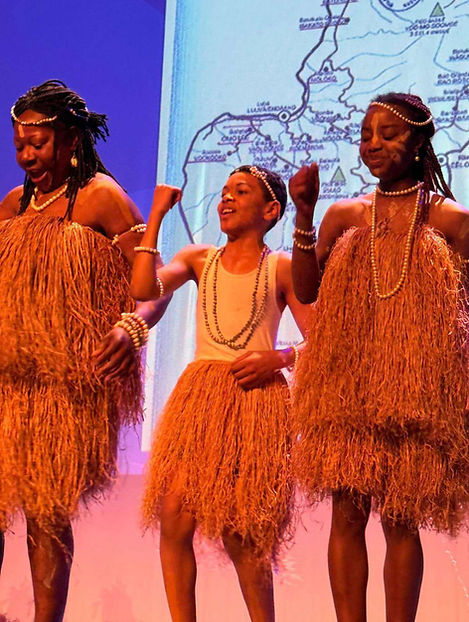
In this 50th issue of ekottomagazine, featuring on our cover one of the rising stars of Bubi dance, we see that the generational transition of this art form—almost unique in the world—is taking place. Thiago fills us with hope.
In this very special and symbolic issue for ekottomagazine, almost the entire interior of its pages focuses on generational succession and the future of Bubi culture, the Bubi mother tongue, and artistic expressions within the generational sphere.
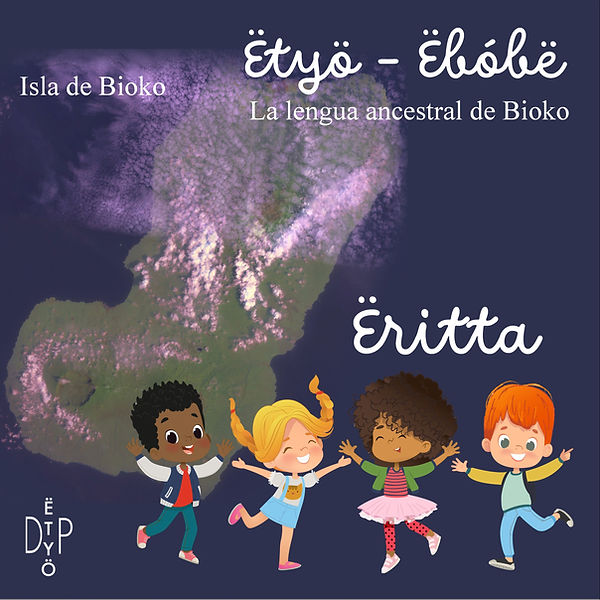
Our news section features literary works dedicated to children for learning the Bubi mother tongue.
Waíssö, from her cultural center in Bátöipökkó, recites the poem “Rihóllè Rillé” by the artist and poet Bësákkò Biá Rihólè.
You can also enjoy a children’s animated production in the Bubi mother tongue produced by the cultural content production company Diversity Ëtyo Project.
Story
THIAGO BERNABE SORIZO VARGAS
Hello, my name is Thiago Bernabé Sorizo Vargas, Siëba sá Bësakko, grandson of Luis Sorizo Sibacha, and I’d like to introduce myself.
I was born in Madrid, Spain. I have family from Equatorial Guinea, from the Bubi ethnic group of Rebola and Bariobe, and I also have Latin American roots on my mother’s side.
I consider myself a responsible person who deeply cherishes my roots. Equatorial Guinea is an African country with many cultures, and I am very proud of the Bubi culture, which is from the island of Bioko.

Bubi culture is distinguished by its deep respect for nature, its ancestral traditions, and its strong sense of community. Values such as solidarity, respect, and cooperation are fundamental pillars that have shaped who I am and how I relate to others.
Furthermore, I believe this cultural heritage has given me an open and adaptable outlook. I strive to constantly learn, improve my skills, and always give my best in every project I participate in.
In addition to performing on my own at events such as baptisms, communions, and birthdays, I take classes with Katya at the Bubi Socio-Cultural Association in Madrid, where we participate in events like Bisila and Ebobe. I previously belonged to the Sonrisas de Rile’o group and have danced with the master Bësakko Bia Rihole in his exhibition (“Bubi Woman in African Textiles”), located in Navacerrada, Madrid.
Thank you very much for your attention.
Best regards, Thiago Bernabé Sorizo Vargas
Interview
THIAGO BERNABE SORIZO VARGAS
Siëba sá Bësakko, Káwëlè?
Thank you for accepting our invitation.
1. When did your interest in Bubi culture in general, and in the art of dance in particular, begin?
I started dancing a year ago.
2. You’re only 12 years old. How do you feel when people applaud you while you dance?
I feel happy and satisfied.
3. Do you dance the dances of your ancestors because you like them or because someone advised you to?
Because I like them; it comes naturally to me.

4. Do you understand any of the words in the songs
you dance to? If not, would you like to learn the Bubi language?
No, but I would like to.
5. How do you balance dancing with your studies?
I study, and in my free time I practice; on weekends, if I’m invited to an event, I dance there.
6. Would you like to be a role model for Bubi dance and encourage your generation to follow your example?
I’d like to be a role model.
7. What do you like most when you’re dancing?
The feeling transports me to another world.
8. Who taught you to dance Bubi?
No one—it just comes naturally to me.
9. How do you prepare before going out to dance?
I rehearse beforehand. I like to get dressed and put
on my makeup by myself.


10. What does it mean to you to represent Bioko’s culture through dance?
It’s an honor and a privilege.
11. What would you say to other children who want to learn traditional Bubi dance?
I’d encourage them—it’s really beautiful.
12. Go ahead. Is there anything else you’d like to say?
I advise the children of my generation to dance and carry on the tradition so that our culture isn’t lost.
We are Bubis, and we must uphold our traditions.
Thank you for accepting our invitation.
Actividad


Thiago Bernabé Sorizo Vargas
602064843
Rosanoemivargas@hotmail.com

@rosavargas710
OPINION

BÖSUBÓBBÈ MAY MATA
Bioko: Between the Natural and the Harmful
On the island of Bioko, where nature generously provides fresh, nutritious foods and beverages deeply rooted in local culture, it is concerning to see how sugary drinks, industrial juices, and energy drinks are increasingly gaining ground in everyday life. It is not merely a matter of preference: it is a shift with real—and, in many cases, dangerous—consequences.
These beverages, marketed as modern and appealing, hide an unhealthy reality. High sugar levels, artificial additives, and stimulants like caffeine make regular consumption a health risk. Problems such as obesity, diabetes, and hypertension—once less common in places like Bioko—are beginning to appear more frequently. And what is most concerning is that this consumption is becoming normalized, especially among young people who see these drinks as a status symbol or a sign of belonging to a global culture.
In contrast, the island has natural alternatives that are not only healthier but also part of its identity. Palm wine, for example, is a traditional beverage obtained directly from the sap of palm trees. Rich in nutrients and free from industrial processing, it represents a more balanced and sustainable way of consumption. But it is not the only option: fresh tropical fruits, freshly prepared natural juices, and other local beverages offer hydration and energy without the harmful effects of processed products.
The problem is not only what is consumed, but what is no longer consumed. By replacing the natural with the industrial, not only is individual health affected, but cultural practices, traditional knowledge, and local economies are also weakened. Every imported can that is opened is, in a way, one less opportunity to value and sustain what is our own.
We need to rethink this trend. Choosing the natural is not a step backward; it is moving forward with awareness. It means caring for the body, preserving culture, and strengthening local autonomy. In Bioko, wealth lies not only in its landscapes but also in what springs from its soil. Ignoring that in favor of products that do more harm than good is a luxury we cannot afford.
In the end, true modernity should not be measured by what we consume from outside, but by how we value and protect what we already have.
BÖSUBÓBBÈ MAY MATA


Poets Blog
EmplusTV
Ë KOTTÒ
Publisher
Diversity Ëtyö Project
Magazine Director
Barbara May
Editor in Chief
Tomás May Pelico
Designer
Böhulá
Colaboration
Eduardo May Mata
ISSN 2833-4124
© 2026
All rights reserved.
May not be reproduced without the written permission of Ë KOTTÒ.
Contact